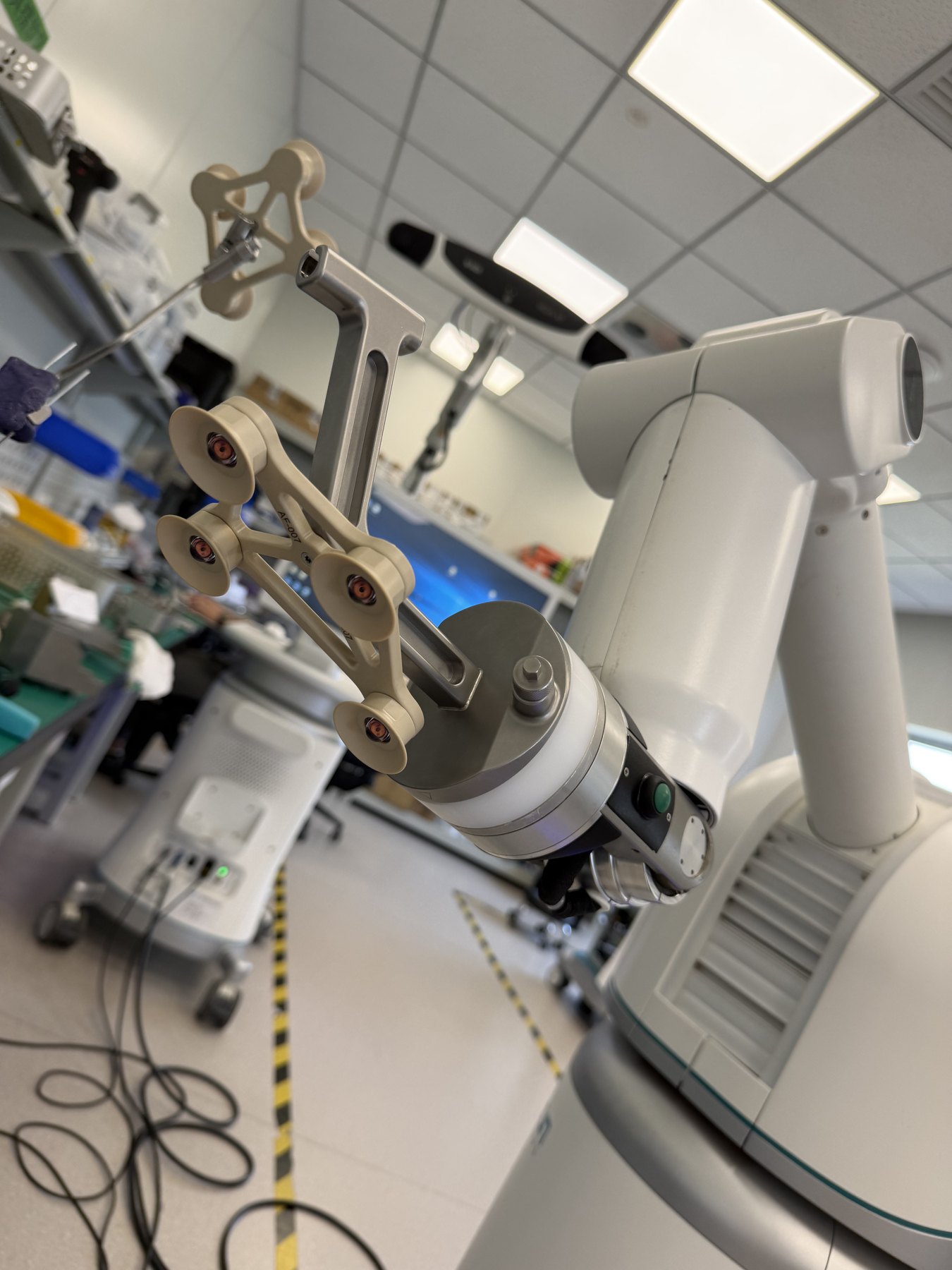
At Visual3D, I explored two sides of medical robotics: helping a surgeon position a tool, and helping someone practise movement after surgery. Both made me think about the gap between a working mechanism and a useful medical product.
01 / SURGICAL NAVIGATION
Making three worlds
line up.
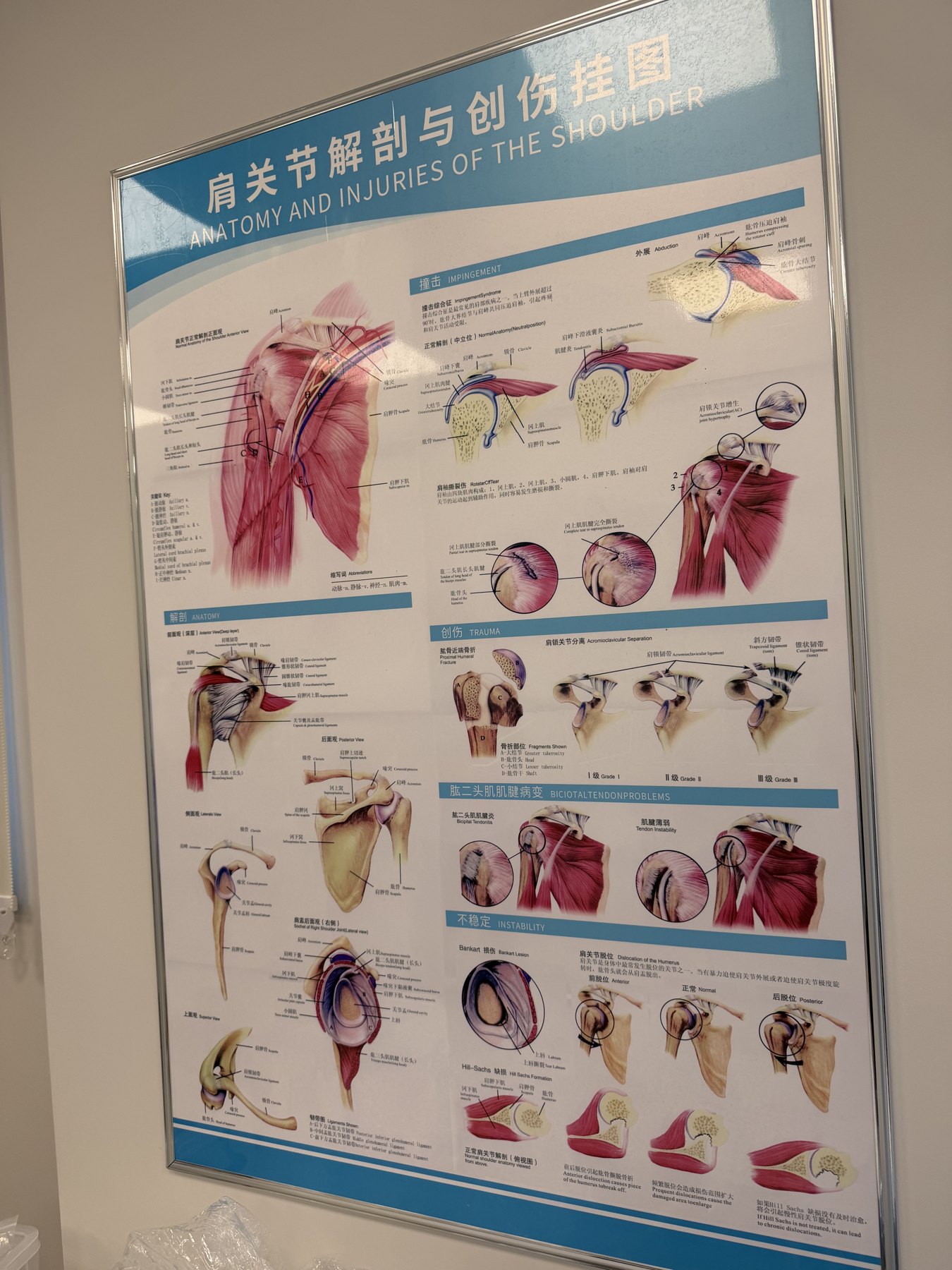
The visit began with shoulder anatomy. Seeing the small joint socket, surrounding muscles and ligaments helped explain why positioning an implant can be such a demanding task. The engineering problem begins with understanding the body.
The demonstration then connected three things: a pre-operative image, the patient’s position during surgery, and the robotic arm. The explanation focused on registration—bringing their coordinate systems into alignment so that a planned position can guide a physical movement.
Pre-operative image
The planned target
Patient position
The anatomy in the room
Robotic arm
The tool’s position
REGISTRATION / A SHARED COORDINATE FRAME
In the demonstration, the arm positioned a guide, and the doctor would perform the next step through it. This helped me understand the robot as part of a surgeon’s workflow, with a person still supervising and carrying out the procedure.
02 / ENGINEERING THE PRODUCT
A prototype is
only the beginning.
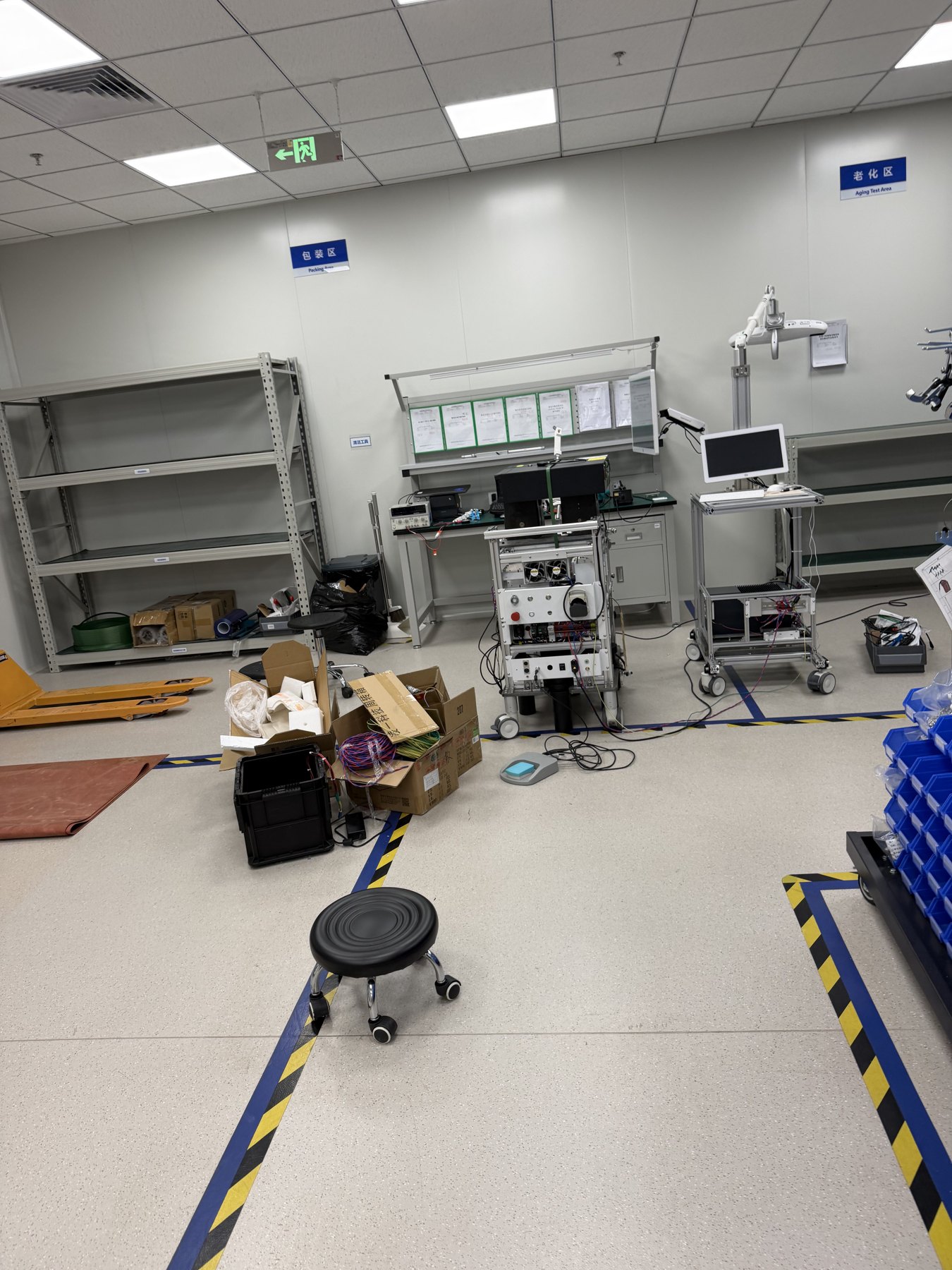
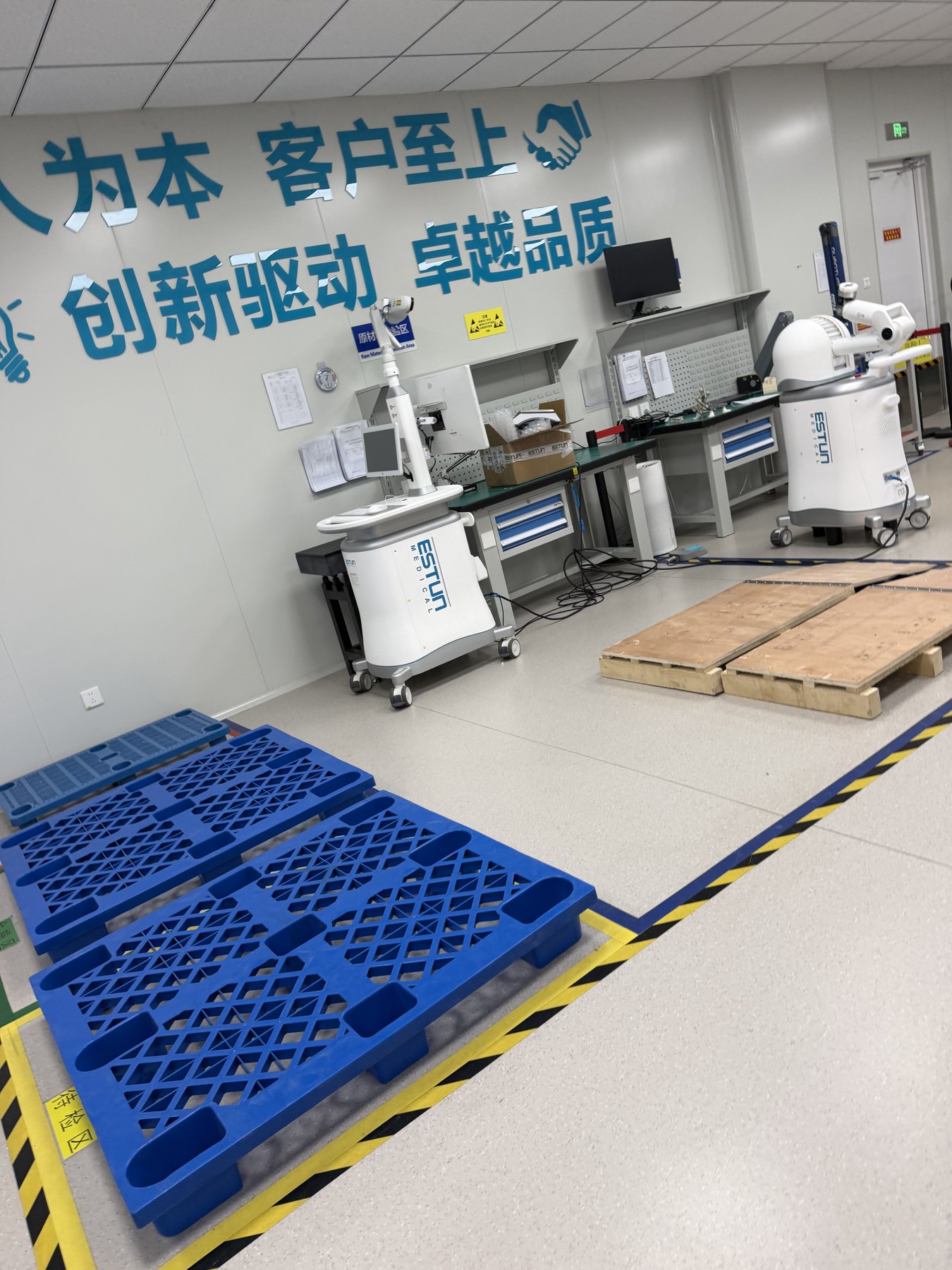
Walking through the workshop brought the product development process into view. We discussed how an engineer translates a doctor’s needs into a design, chooses materials and manufacturing methods, then checks whether the resulting parts meet the specification.
- 01
Understand the need
Work out what the doctor needs to achieve and what the device must do.
- 02
Design & manufacture
Connect the design to suitable materials and a process that can actually make it.
- 03
Inspect & assemble
Measure the parts, check their fit, and bring them together into a system.
- 04
Test & document
Establish evidence for performance and safety, with records that make the work traceable.
Traceability
The team described controlled procedures and workstation instructions. Recording each step helps make it possible to investigate where a problem originated.
Reliability & redundancy
The discussion of failures and backup arrangements made the stakes clear. A medical device needs a much more considered response to a fault than simply restarting it.
Computing & privacy
The system we discussed performed its calculations on the device. The conversation also highlighted the constraints around hospital systems and sensitive data.
03 / MOVEMENT AS A GAME
When the interface
becomes part of the exercise.
The rehabilitation demonstration showed another way to bring hardware and software together. A person moved with the device while interacting with an on-screen game. The physical movement and the digital task became parts of the same experience.
What the video shows
A seated participant holds the device’s handle and moves it while watching a game on a monitor. The screen provides a visual task alongside the physical exercise.
The team explained that they developed the game themselves. The conversation also connected computing and engineering skills with an understanding of medicine and biology.
It made me curious about how game design can help sustain attention during repeated movement. For an engineer, the interface is another part of the system to think about, alongside the mechanism itself.
04 / WHAT I TOOK AWAY
Engineering includes
the person using it.
My strongest takeaway was how many disciplines meet inside one medical device: anatomy, mechanics, measurement, software, manufacturing and human judgement. Understanding their connections feels just as valuable as understanding each part.
The discussion of AI also stayed with me. The team emphasised assistance and medical supervision, raising questions about how to establish evidence for a system’s behaviour and respond to unexpected outputs.
A CONNECTION TO MY OWN WORK
My music accessibility app and vibration belt ask a different question, but this visit gave me useful things to consider: how someone interacts with a device, what feedback they receive, and how I could evaluate whether the experience helps them.
Explore my music accessibility projectsQuestions I’m carrying forward
- How do engineers measure whether a device meets its users’ needs?
- How can physical and digital feedback make an interaction easier to understand?
- What evidence would make me confident that something I built is reliable?
05 / RECORDING NOTES
From the visit.
Selected topics from the two Mandarin recordings, summarised in English. Times are approximate.
Recording 01 · Anatomy & surgical robotics · 10:45
- 00:39–01:21
- Introduction to the company’s orthopaedic and rehabilitation work.
- 01:28–06:04
- Shoulder anatomy, joint implants and the need for careful positioning.
- 07:09–08:29
- Planning before surgery and the role of quantitative assessment.
- 08:35–10:04
- Robots as systems that sense and act; an introduction to the mechanical arm.
Recording 02 · Navigation & product engineering · 17:16
- 00:00–03:40
- Aligning coordinate systems, positioning a guide and maintaining human supervision.
- 04:06–06:26
- 3D printing, measurement, design, manufacturing, inspection and assembly.
- 06:57–09:38
- Controlled procedures, traceability, internal components and on-device computing.
- 09:39–12:26
- Testing, establishing evidence, safety and redundancy.
- 13:27–14:02
- AI as assistance and the importance of a doctor’s final judgement.
- 15:13–17:16
- Introduction to the rehabilitation demonstration.
Based on the visit recordings, four on-site photographs and the rehabilitation demonstration video. Company website: Visual3D / Visual MedTech.